
Welcome to the Science Fight Club
An image that says “Science Fight Club” in large red letters. The image has a fist holding a test tube. Smaller text next to the hand on either side says “Established 2025”.
When I think about the American Scientific Ecosystem, I think of the Amazon Rainforest. I use the term “ecosystem” because much like a natural ecosystem, every species is a building block to the health and prosperity of the entire system. There are giant established trees, powerful colonies of insects, all manner of flora and fauna, predictable seasons, waterways teeming with life, birds in the air, monkeys in the trees, critters on the ground. It is the predictable cadence of nature that allows the forest to thrive and evolve forward.
You’ll note I don’t use the term “enterprise” because while our science does host several huge economies—much like the Amazon—American Science is not inherently a business. It is an interconnected network; a system that exists for a greater purpose than shareholder value. Indeed, if we limited our science to that which can be monetized as quickly as possible, we would sell all of humankind short of critical knowledge and discovery of the world around us.
This year has not been kind to our science. Much like the Amazon, this Ecosystem of ours has experienced a great, human-caused destabilization; putting its very existence at risk. But I believe the Scientific Ecosystem is resilient and we can step in to protect it, reestablish the cadence, and nurture it for a more vibrant future.
A Review of 2025
For all intents and purposes, 2025 was a shit show. It was a category 5 hurricane, an EF-5 tornado, and a 10.0 magnitude earthquake all at once, followed by a 509-foot tsunami. For the larger part of three decades, an anti-intellectual, anti-scientific movement has been building a machine in the background whilst science hummed along blissfully (perhaps purposefully?) ignorant, all to come crashing to the top of power in 2025—bringing with it the greatest destabilization of science in our nation’s history. And I won’t sugar coat it: science was not prepared. Consider this a Reviewer 2’s take on science, science in 2025, and the future of science in the US and beyond.
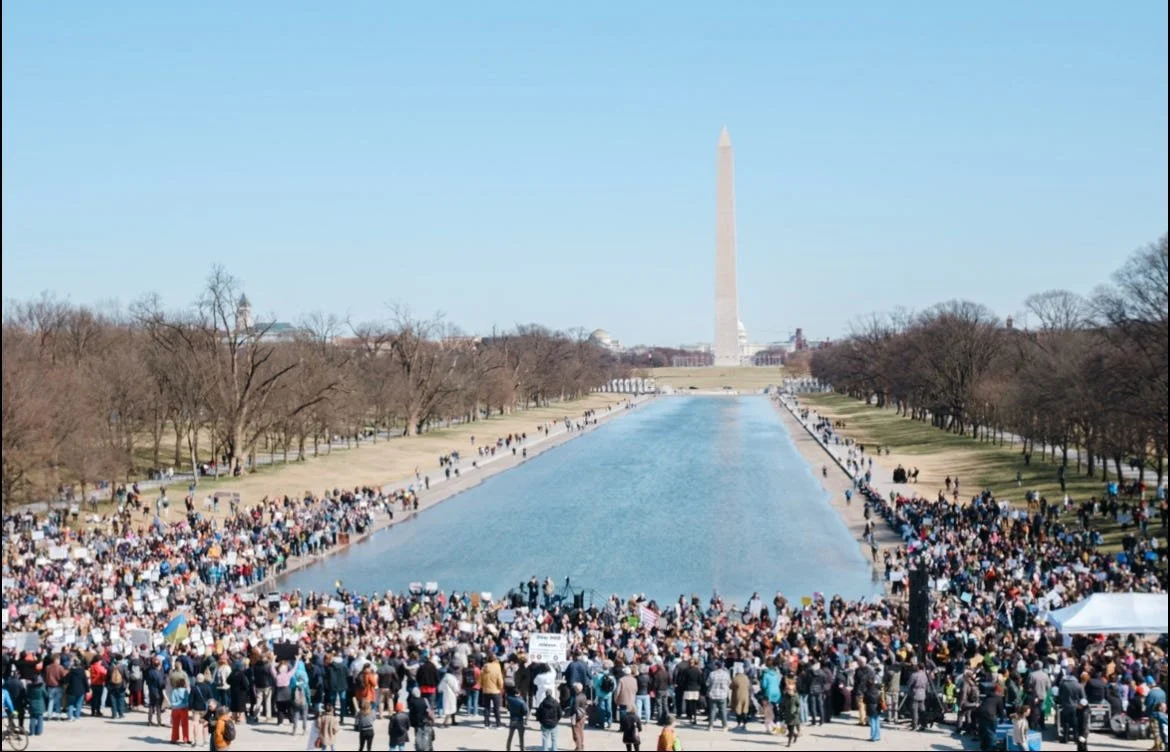
A photograph from the 2025 March Stand Up for Science in Washington, D.C.
Science is Political
Scientists have long sought to distance themselves from politics because we thought truth and facts would speak for themselves. But policy does not flow directly from truth, and scientists need to learn how to stand up for themselves and each other. That takes work. We may wish that we lived in a nation that doesn’t need direct action to hold legislators accountable. But as we say in science: “the facts are the facts, regardless of how you feel about them.”
In many ways, distancing oneself from politics has been painted as a signal of virtue in the scientific community. By handwaving away politics one could both opt out of engagement and “stay above the fray.” Unfortunately, the facts tell us that political machinery is required to bring truth to policy, even if one prefers to “remain apolitical.” In decades prior, voting and relying on a dozen representatives from several organizations to lightly engage on Capitol Hill during appropriations season was plenty to ensure the existence of the American scientific Ecosystem. This is not political machinery and has failed us miserably this year.
What are we up against? We live in a post Citizens United America. This means that the assault we have experienced in 2025 was a billion-dollar effort, decades in the making. It was systematic and used dark money pipelines to channel huge amounts of corporate and individual dollars through efforts to intentionally fracture the social contract between science and the public. The distrust, the misinformation, the politicians who have repeated talking points on Fox News for years, the Joe Rogan’s of the world, the MAHA Mommas, the Christian Nationalism…was not accidental. COVID-19 was leveraged to launch fray ideas about science, medicine, and public health into the mainstream, and now we are here.
Sure, there are niche areas of “science” that have political machinery! The American Cancer Society is one example—they have a standard non-profit arm and a political arm where they can engage in lobbying, campaigning, and endorsing candidates. This is important work that should continue. But picture bulldozers tearing through the Amazon and only a few groups trying to save specific species…while the rest of the forest and its inhabitants are destroyed. If the Amazon is destroyed, efforts to promote toucan vibrancy are pointless. This type of fragmented activism only works when the entirely of the Ecosystem, itself, is stable and thriving. Otherwise, groups take an inch now, to sacrifice a mile later. Senator Earnst in Iowa is a great example; she co-sponsored a bill supporting Epilepsy research (lobbied by the National Epilepsy Foundation—this is a good thing!) and then turned around and voted to kick 16m Americans off their Medicaid… many of whom are on Medicaid because of epilepsy.
Politics is a marketplace of power. Refusing to participate in the marketplace of power and to hold accountable those who are pushing a dangerous and misguided anti-science agenda, is a losing strategy.
The top of the United States Capitol building in Washington, D.C.
We CANNOT Conflate Reform and Destruction
I have yet to speak with a single scientist this year who thought that our ecosystem on Jan 19th, 2025 was perfect. Many groups have been working towards reform, at different points in the discovery pipeline, for years. Our work with federal employees was the most eye opening for me in this regard. Nobody wants to improve their agency more than the people who work in it! And, frankly, they have great ideas. This is to say, our Ecosystem has room for improvement. This is important work that we should continue to take very seriously. It is not, however, a reason to bulldoze the whole thing. It is dangerous to use reform to justify demolition, and we should be intentional in our language. Conflating these two distinct paths of action delegitimizes science, medicine, and public health. You don’t tear down your whole house if you find an electrical issue, you call an electrician and you get the problem fixed.
#SciComm Isn’t Going to Save Us
Far fewer people give a shit about the incredible double helix structure of DNA than you would like. You dedicated your life to science because you’re in the top .01% of people who are interested in these things. The public certainly enjoys some facts about science, and this is good work to be doing. However, Science Communication is not going to save us from fascism.
I cannot tell you how many people have approached me about “just making stories go viral on social media.” The stories that MAGA/MAHA “just make go viral” are not flukes or accidents. These are carefully selected, curated stories that are intentionally pushed through channels with specific audiences, en masse. The stories are shaped, edited, and platformed with a huge amount of intention. This is what MAHA Action (a 501c4 organization with 10’s of millions of dollars in their war chest) does with their money.
Communications, messaging, social media, and press are hugely important in this battle; and we (The Scientific Ecosystem) are getting dog-walked. Dr. Mike nails it here: scientists don’t take this serious and think it can be hand-waived away. Comms and messaging are critical areas that need to be taken seriously, and scientists need understand that these are jobs that should be done by professionals. This leads me to my next point…
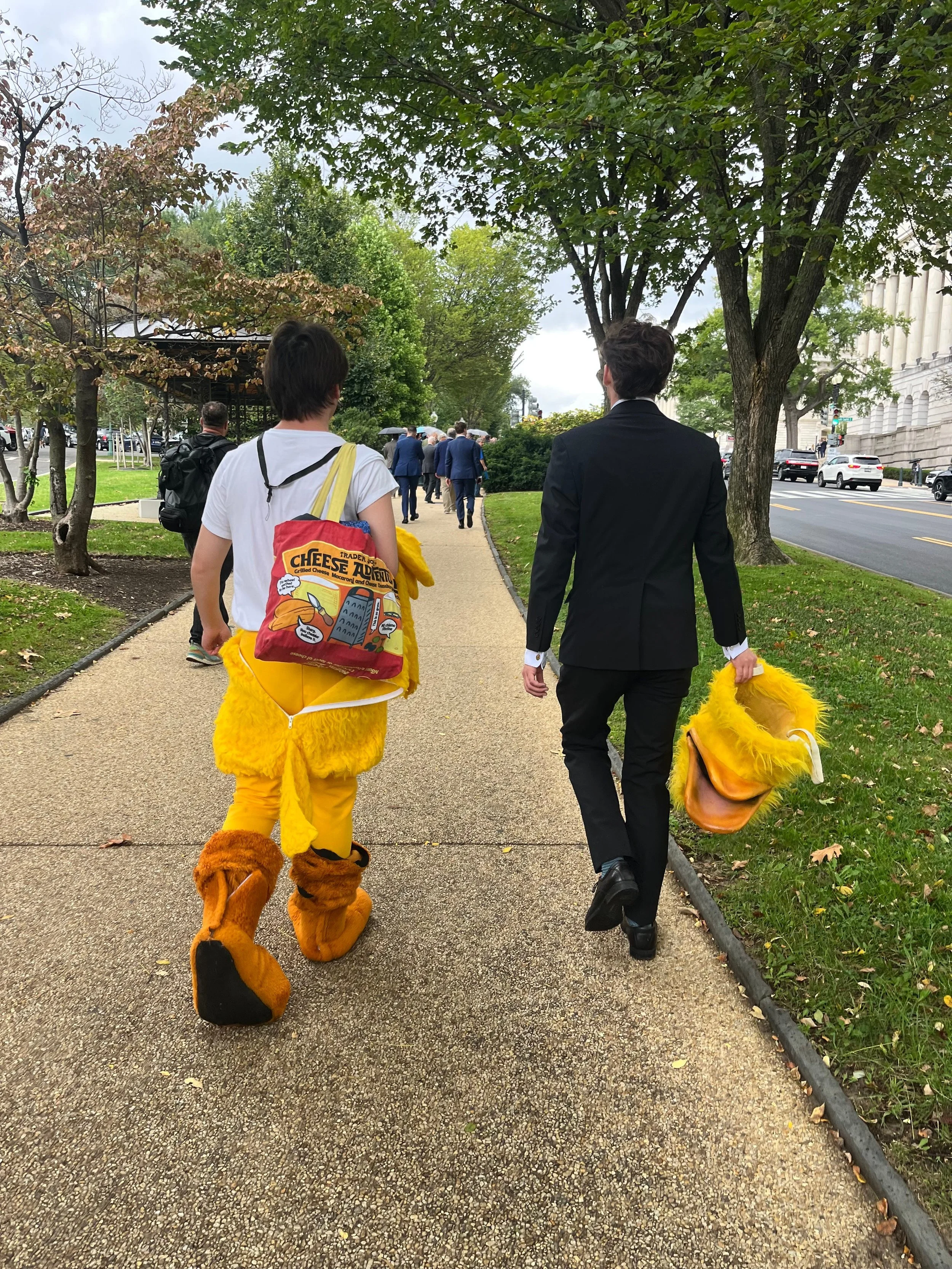
A man in a duck suit walking next to a man in a suit on Capitol Hill.
Scientists Are Uniquely Hard to Mobilize
PUBLIC SERVICE ANNOUNCEMENT: Your expertise in science does not translate to the skill set of effective politicking and organizing. In fact, I would argue that training in the sciences suppresses this particular skillset.
Our training prepares us to be experts in niche areas. We live in the weeds. We wade through the chest deep waters of nuance all day, then we wake up the next morning and do it again. We are meticulously skeptical. We are careful to craft our statements to show the push and pull of putting a well-loved hypothesis through the wringer of empiricism. We work hard to protect our work from bias. Activism requires the opposite, in many ways.
My recent example of this happened when we launched our phone banking operation for the TN-07 special election. We used the best software available for phone banking, which comes with standardized ways to code the responses from the folks who we talked to. Every time we debriefed our volunteers, you would have thought this was a lab meeting about coding protocol. We had to change the standardized options daily because of the need for more structure. Our national electoral director, who has been leading phone banking for a decade, making millions of calls for hundreds of campaigns, said he’s never seen a group have such difficulty with coding the call responses. By the way, we made 60,000 calls!
Activism requires us to pick a side—passionately. It requires us to look past that one may deeply disagree about XYZ detail in the plan (e.g., how we deal with toucan vibrancy in the Amazon) to fight together for the larger goal (e.g., saving the Amazon). Activism requires us to have a simple message (e.g., Stand Up for Science). Activism requires us to move quickly and urgently, and often without as many details as we would like. Activism pushes us out of our comfort zone. Activism necessitates we be the convincers, instead of the skeptics. This is a hard adjustment!
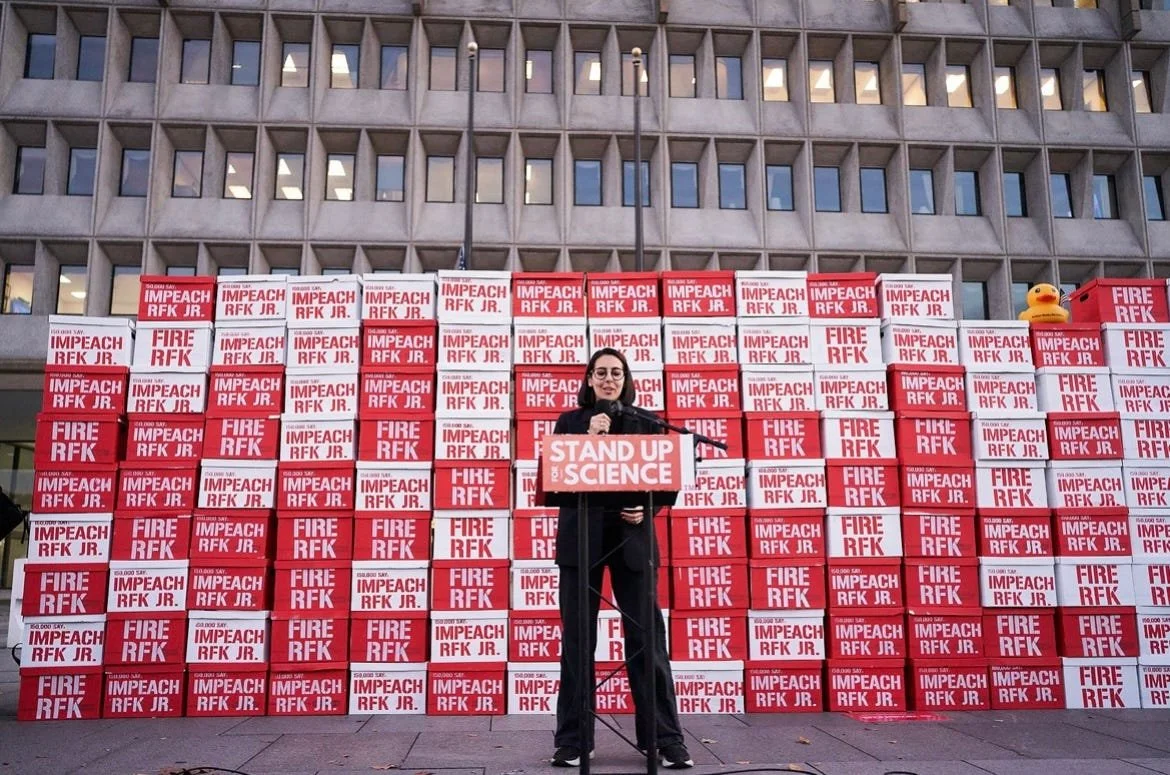
Colette Delawalla, founder and executive director of Stand Up for Science, standing in front of a wall of boxes containing signatures endoring the impeachment of RFK Jr.
It’s time to try something different and that might be uncomfortable…
If science needs politics to flourish, but supporters of science are wary of politics, how do we move forward? Further, right now, how should the scientific community engage when one party is actively inflicting damage on science in a manner that has never happened in American history?
We are in an uncomfortable moment, which requires scientists to venture outside of the comfort zone of our labs and typical approach. Many people who take their civic duty of voting seriously also say they don’t like to get political. They do not speak out about issues, protest in the street, call their Senators, write op-eds, or donate to political organizations. Perhaps they attend various meetings that discuss political action, but they are not likely to engage in the action. They are willing to let other people stand up for what they themselves, believe in.
Success moving forward requires three things: first, every individual must acknowledge that being a scientist in 2026 and beyond requires doing more than just voting, otherwise you are benefiting from a system you are not willing to stand up for. Second, the old guard must support and pass the baton to organizations that are bringing innovative strategies to the fight to save American science. This means supporting new approaches to political action, such as the new impeachment push against RFK, Jr., even if it strikes folks as partisan and edgy. “The usual approach” is simply not working. Third, it is time for scientists to step out of the lab, take action, and get in the fight.
You may not fully agree with me or Stand Up for Science on tactics. This may make you deeply uncomfortable. I get it. I’m writing to ask for your trust, despite discomfort. Going into 2026 I have one request: Get in, Dorks!
In 2026, We Are Taking Back Our Science.
Science Insurance. The Science Mafia. Science Fighters. I don’t care what language you use to describe Stand Up for Science, but consider us the organization you can count on to be fighting like hell for you in Congress and in the court of public opinion—so you can keep up your science. We don’t need you to become a social media expert, we already built a kick ass government relations team in on the Hill. We don’t need you to run for office, we are infusing science into the Midterms. We don’t need you to produce commercials, we are already on it.
Here’s a brief overview of what Stand Up for Science has accomplished in 2025:
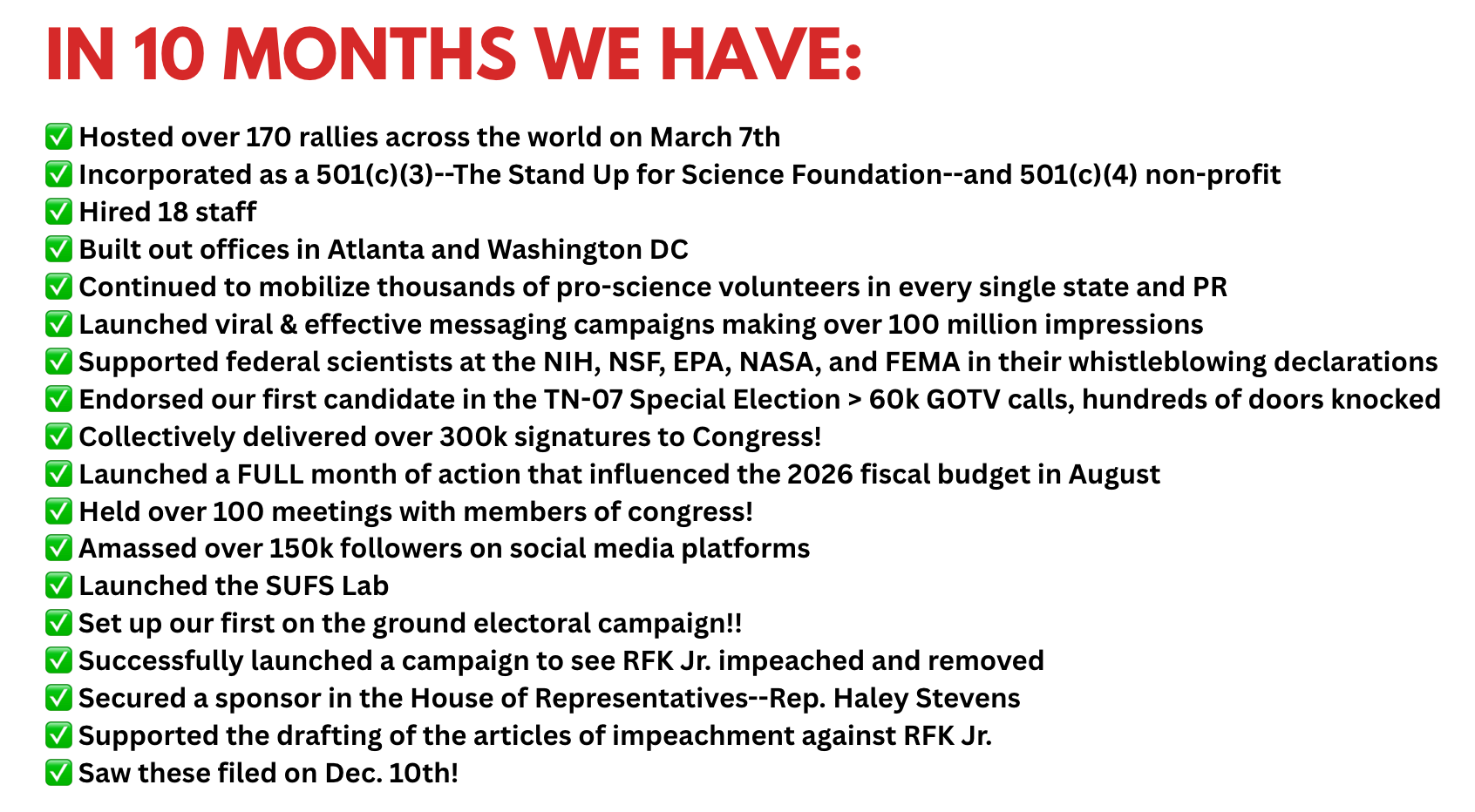
An image of the accomplishments at Stand Up for Science since its creation in February 2025. The list includes hosting over 170 rallies across the world on March 7th, supporting federal scientists at the NIH, NSF, EPA, NASA, and FEMA in their whisteblowing declarations, and successfully launching a campaign to see RFK Jr. impeached and removed.
What we need is your people power. When we put out a petition, sign it. When we host a protest, attend it. When we say, “call your Congress Critters,” call them. When we call for volunteers, sign up. When we ask for financial support, pitch in. When we ask for you to share our calls to action, share it! My commitment to you is that we will not waste your time with shit that doesn’t matter. I know you are busy and we are asking you to do more. Our goal is to make “getting political” easy and impactful. Every call to action is intentional and serves a critical purpose in building out the political machinery to take back our science.
We’re heading into 2026 with big ambitions and zero patience for naysayers. Stand Up for Science will build the power necessary to fight for democracy, defend scientific integrity, protect public health, and hold Republicans and the White House accountable. In 2025, we responded to political attacks on science. In 2026, we go on offense: organizing to win and locking in safeguards to last. We have a full docket, and we’re excited to share a few previews:
RFK Jr. impeachment & coalition-building: We’re carrying the impeachment effort into 2026 as an accountability campaign with staying power, not a short-lived story. That means equipping members of Congress and staff with clear documentation and oversight asks, while building a coalition that can move public opinion and congressional action, together. The stakes are simple and existential: scientific integrity and a functioning public health system. Our goal is sustained pressure that translates into oversight, consequences, and a durable bloc in Congress that will not compromise when science and public health are on the line.
Scale our voice and reach: 2026 is the year we reach everyone who wants to fight and bring them onboard. We’re launching podcasts to create storytelling that mobilizes bringing scientists, activists, affected communities, and policy leaders into the same conversation, week after week. That’s paired with faster editorial work and sharper social amplification so when anti-science narratives spike, we’re already publishing, offering the clearest explanation of what’s happening, why it matters, and what people can do next. We’re building a consistent, high-trust platform where subscribers, Hill staff, donors, and allies can track the fight without getting lost in the noise.
Science without borders: science diplomacy that’s bigger than any one country. In 2026, we’re going global with a version of science diplomacy beyond nationalism. We’re convening internationally because attacks on public health and scientific integrity don’t stop at borders. This is about making scientific integrity part of global democratic infrastructures, building cooperation as the default, and showing that together we’re stronger.
November 2026 midterms: becoming a campaign powerhouse. We’re building the financial and operational infrastructure serious political work requires. The second half of 2026 is about turning our movement into election results. After the primaries, Stand Up for Science will scale an election-grade operation to take back power in Congress. The goal: protecting science funding and integrity, building stronger public health safeguards, and restoring real checks on executive abuse.
If you’re ready, subscribe to the Science Fight Club Substack and get locked in. Let’s do this.